“Show me the manner in which a nation cares for its

dead and I will measure with mathematical exactness

the tender mercies of its people, their respect for the

laws of the land and their loyalty to high ideals.”

– Sir William Gladstone

Tuesday, January 12, 2010

Hearse (with no T)

One of the trademarks of the funeral is the Hearse or the "Funeral Coach". First, a little etymology. Funeral comes from the Latin Funeralis which actually means torchlight procession. This seems to be a topic of disagreement among some linguists who claim that funeralis simply means having to do with a funeral <- I could have made that one up. It's not just for safety that cars drive with their headlamps on during a procession, it is also symbolic of torches that were carried when processions were on foot. A little more etymology, Hearse comes from the Old French Herce, which is a rake or a harrow. Makes sense, right? OK, maybe a little more explanation. Cemeteries that were extramural required a lot of walking for the mourners - and especially the bearers. So wagons or carriages began replacing walking, and the bearers were relieved by a flat wagon that would bear the weight of the casket, it was called a bier. Biers are still used today to place caskets for viewing, but many are seen on the more-portable church truck. Remember the torchlight? Candles or torches were placed on a spiked form that lay upon the bier or even over the deceased at a viewing for soft lighting. This apparatus resembled (or in some cases may have actually been) a rake or harrow aka a herce. Over time the vehicle carrying the casket inherited the name. I do not know why many people put a T on the end and pronounce it Hurst!
Interesting Note: Since you now know that a hearse is a rake or harrow, doesn't the word rehearse make more sense? You rake over and over something when you re-hearse.

FAQ: What is the design on the back of the Hearse?
The S-shaped bars are known as Landau bars and are seen on vehicles from the late era of carriages and even early era of automobiles. They were originally attached to a soft top that could be folded back during nice weather. They represented fine-quality carriages and cars and were kept as part of the pres
tigious design.

A Processional Bier from greenfieldswoodlandburials.co.uk

A Viewing Bier from gunderchurch.com and a Church Truck from premierfuneralsupply.com


Bars on a Landau Carriage and Landau Bars on Hearse from federalcoach.com

Monday, January 11, 2010

Pallbearer or Casket Bearer?

There has been a recent shift in lingo when it comes to funeral-related terms. This, mainly because of society's desire to distance themselves from terms that are potentially unpleasant. Headstone has become Grave Marker, Funeral has become Celebration of Life, Hearse has become Funeral Coach, etc, etc. So why the shift from Pallbearer to Casket Bearer?

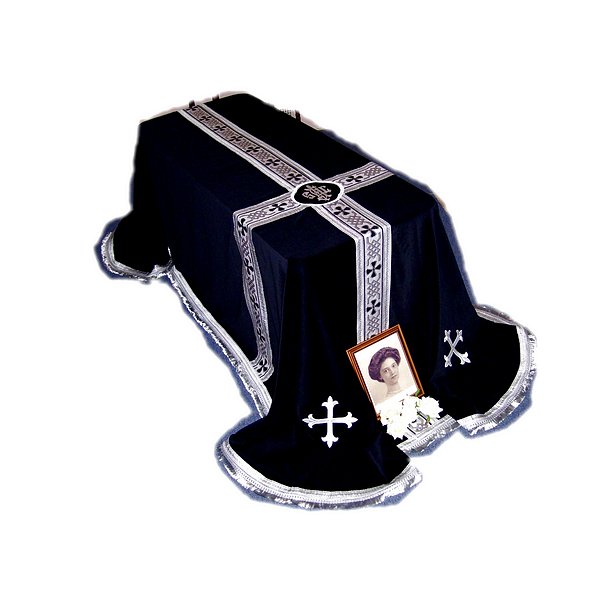
In reality, this term is changing due to a term that is no longer relevant. A pall is a heavy cloth that once draped over a casket and is still in rare use today. The term pall is still used to refer to a covering in the figurative sense, such as "a pall of suspicion" It once was that there were men designated to carry the pall to the place of rest, and these were true pallbearers. The men carrying the casket were known simply as bearers (usually four) and four others acted as relief on "long hauls", they were under bearers. (Habenstein, Robert, and William Lamers. The history of American funeral directing. 1981, 1981. 234. Print.)

Usually the men were prominent in the community or within the family. Today it is not unusual to see females act as bearers especially those closely related to the deceased. The number of bearers can range from four to ten, though space can become quite limited. If more than ten are selected, half may be used from the funeral venue to the hearse, and the remaining from the hearse to the grave site.

FAQ: What is an Honorary Pallbearer?
An honorary bearer is a person that the family wants to make special mention of, but that does not actually carry the casket. Sometimes honorary bearers sit in a designated place for the service or may wear a boutonniere.

Below is an example of a pall, this one from www.susanmaria.com